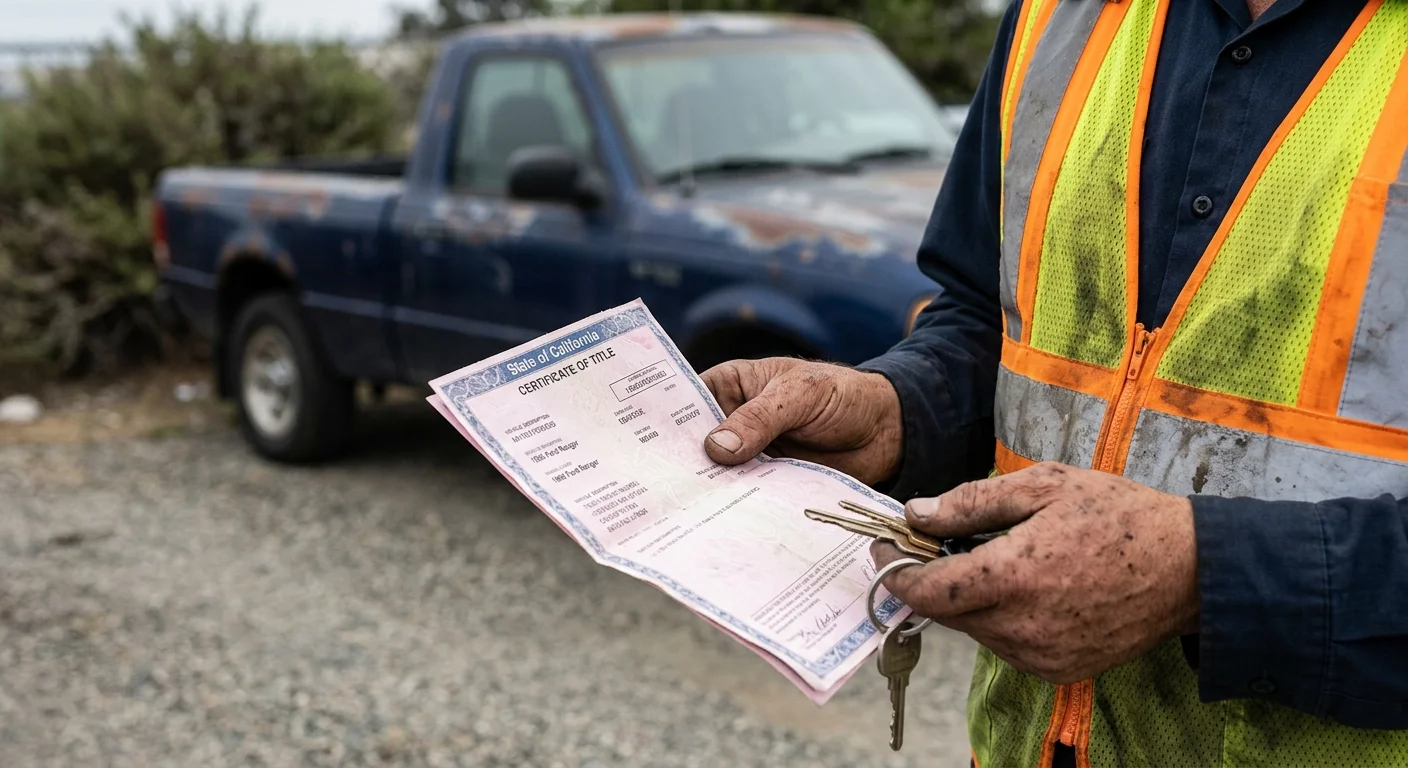
To junk a car in California, you need three things: a signed Certificate of Title, a release of liability filed with the DMV, and a valid photo ID. With those ready, a licensed dismantler picks up the vehicle, files its own paperwork, and the car is officially out of your name. Here is the document-by-document version, written for LA County drivers.
Deciding to junk an old car is usually a relief. It frees up the driveway in Van Nuys, clears the alley in Boyle Heights, removes an eyesore from a side street in Pacoima, and can put a small amount of cash in your pocket. The DMV paperwork is the part that trips people up, and getting the documents right before the truck shows up makes the whole day go faster.
The certificate of title (pink slip) is the cornerstone
When you junk a car in California, the cornerstone is the Certificate of Title, often called the pink slip. That document proves you own the vehicle. Without it, transferring ownership becomes much harder, and most legitimate dismantlers will not accept the car.
The pink slip carries the VIN, year, make, model, and your name as the registered owner. When you transfer the vehicle to a dismantler or a hauling service, you sign and date the title in the Seller section. That legally moves the vehicle out of your name, whether the buyer is going to repair, dismantle, or scrap it. Make sure the name on the title matches your current legal ID. If there is more than one owner listed, each one usually has to sign.
What if the pink slip is lost? The REG 227 form
It is very common for an old car to come with a missing or damaged title, especially if the car has been sitting for months. California handles that case through the Application for Duplicate or Transfer of Title, REG 227. This is the DMV form that lets you apply for a duplicate title or complete a transfer of ownership when the original is gone.
To use REG 227, fill it out with the VIN and your driver’s license number. Sign as the legal owner. If a lender holds a lien, the lienholder typically has to sign off or provide a lien release. REG 227 is available on the California DMV website or at any DMV office. Once you complete it, most dismantlers accept it in place of the original pink slip, with your photo ID. This form is the practical fallback when the original title is missing, and it keeps the transfer legal.
Filing a release of liability is not optional
Filing a Release of Liability (REG 138) with the California DMV is the step that protects you after the car leaves your hands. If the junked car later racks up parking tickets, sits abandoned, or is involved in something worse, the DMV still treats you as the owner of record until you file that release.
REG 138 notifies the DMV that you are no longer the owner of the vehicle. You provide the vehicle details, the date of sale or transfer, and the new owner’s name and address (in this case, the dismantler or towing operator). You can submit it online through the DMV website, which is the fastest route, or by mail at no charge. File the same day the vehicle leaves your property and keep the confirmation the DMV sends back. That confirmation is your protection against anything that happens to the car after the tow truck pulls away.
The “junk slip” terminology is confusing on purpose
Searching for a “junk slip” from the DMV tends to surface the wrong document. Three real documents get called that, and only one is yours to file.
The one you file is the Notice of Transfer and Release of Liability, REG 138. You submit it the day the vehicle leaves your property, free, online at dmv.ca.gov. That stops old tickets, tolls, or an abandoned vehicle notice from coming back on you.
The one the yard files is REG 42, the Notice of Acquisition / Report of Vehicle To Be Dismantled. A licensed dismantler files this after acquiring your car, and it closes the vehicle record on their end. You do not fill out a REG 42, and you should not be handed one to sign as the owner. If a buyer hands you one, that is a sign they may not be a licensed dismantler.
The closest thing to an actual “junk certificate” is the Junk Receipt. The DMV describes a Junk Receipt as a certificate the DMV issues instead of an ownership certificate for a junk vehicle. It is issued when the owner surrenders evidence of ownership and asks the DMV for junk status, and from that moment it serves as the ownership document. That is the form to ask for if what you actually want is a DMV-issued certificate saying the vehicle is junk, rather than just getting the car hauled away.
The practical answer to “how do I get a junk slip from the DMV” is: sign the title over (or file a REG 227 if the title is lost), and file REG 138 that same day. If you specifically need a DMV-issued junk certificate in hand, request the Junk Receipt instead. Sources for the terminology: the DMV’s Dismantlers Handbook of Registration Procedures, sections 4.060 and 7.010.
What about the registration card
The current vehicle registration is not what transfers ownership, but it is still useful to have it on hand. The registration card carries the VIN, plate number, and current registration status, and it helps cross-check details when you sign the title over.
For a car you are junking, the registration does not need to be current. If it has expired, that is fine, and you do not have to renew it before junking. Bring the most recent registration card along as a second identifier for the vehicle itself.
A simple checklist of everything you need
Before the truck arrives, gather:
- California Certificate of Title (pink slip) signed and dated in the Seller section. If there are multiple owners listed, each owner signs.
- Application for Duplicate or Transfer of Title (REG 227), only if the original title is lost. Fill it out completely, including the VIN.
- Valid photo ID, such as a California driver’s license or state ID. The dismantler will compare it against the title or REG 227.
- The most recent registration card. Not required for ownership transfer, but it speeds up the cross-check.
- Lien release, if applicable. If you still owe money on the car, the lender has to release the lien before the title can transfer.
Pulling these together before the truck shows up keeps the day short and keeps you out of the parking lot arguing about a missing signature.
How a junk car removal service in LA County fits in
DMV paperwork is a small maze to walk through the first time. A local hauling service that works with licensed dismantlers across LA County can usually walk you through what you need. Tell them up front whether you have the title, have lost it, or have a lien. That determines whether you need REG 227 or a lien release instead of a clean signature.
When the operator arrives for junk car removal, they bring their own bill of sale and dismantle paperwork. You add your title signature or REG 227, hand over your ID, and the operator handles the rest of the transaction that day. You still file REG 138 yourself online at dmv.ca.gov. The operator files REG 42 on their side. That is the full chain that gets the car out of your name, off your driveway, and into the dismantle pipeline.
Coverage runs across the LA metro, from the San Fernando Valley down through Glendale and Eagle Rock, across the 110 through South LA, out PCH through Malibu and the canyons, down to Long Beach. Operators price each job for the vehicle and the route, not by the city, and you get a written total before the truck rolls.
When the paperwork is not ready
If the title is held by a lender you no longer have contact with, that is a separate problem. Ask the DMV how to satisfy a lien release when the lender is unreachable. If the car is not in your name on the most recent registration, your buyer cannot take it on your signature alone. Solve the chain of title before the operator shows up so nobody is waiting in the driveway for paperwork that may take a week to arrive.
If the car has been sitting long enough that you cannot remember which neighbor parked closest to it, do not let that stop you. A licensed dismantler takes the car on your signature, your REG 227 (if the title is lost), and your photo ID. The DMV paperwork on your end is the same set of forms either way.
When to call
When the car is ready to go and the paperwork is laid out on the kitchen table, that is the moment to call. Quick Tow LA matches you with a local licensed operator who hauls the vehicle, completes their side of the dismantle paperwork, and pays you on the spot. Call (213) 410-1414 to set up pickup across LA County.
Frequently asked questions
What paperwork do I need to junk a car in California?
The Certificate of Title, the pink slip, signed and dated in the Seller section, plus your photo ID. If the title is lost, use REG 227, the Application for Duplicate or Transfer of Title, which most dismantlers accept in its place. Then file REG 138, the Notice of Transfer and Release of Liability, the same day the car leaves your property.
Can I junk a car in California without the title?
Yes, in most cases. Fill out REG 227 with the VIN and your driver’s license number and sign as the legal owner. If a lender holds a lien, the lienholder usually has to sign off or provide a lien release. A licensed dismantler will generally take the car on a completed REG 227 and your photo ID.
What is a junk slip from the DMV?
Three different documents get called that, and only one is yours to file. You file REG 138. The licensed dismantler files REG 42, the Notice of Acquisition, which you should never be asked to sign as the owner. The closest thing to a real junk certificate is the Junk Receipt, which the DMV issues in place of an ownership certificate once the owner surrenders evidence of ownership and requests junk status.
Does my registration have to be current to junk the car?
No. An expired registration does not stop you from junking a vehicle, and you do not have to renew it first. Bring the most recent registration card anyway, since it carries the VIN and plate number and makes it easy to cross-check details before you sign the title over.
What happens if I skip the release of liability?
The DMV keeps treating you as the owner of record. Parking tickets, tolls, or an abandoned vehicle notice can come back on you after the car has left your driveway. File REG 138 online at dmv.ca.gov on the day of pickup and keep the confirmation the DMV sends back. When the car is ready to go, call Quick Tow LA at (213) 410-1414 and we will match you with a local licensed operator for junk car removal.