The right tow yard depends on who ordered the tow and where it happened. A Los Angeles address alone won’t identify the lot, because city, county, freeway, and private-property tows follow different systems. Start with the towing authority, then confirm the yard before traveling there.
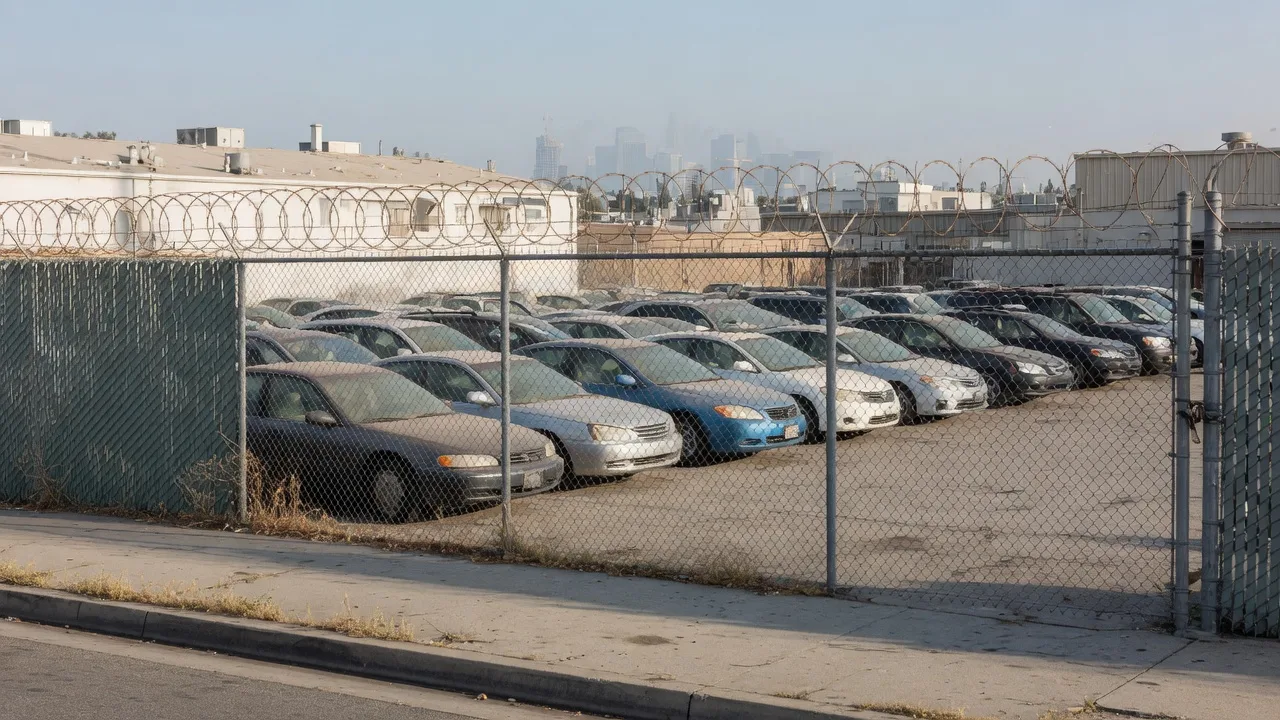
Police, city, and private-lot yards are different lists
A search for “towing yards near me” can produce lots across Los Angeles County. Proximity doesn’t mean your car is there. The correct list depends on the agency, property owner, or operator behind the tow.
Inside the City of Los Angeles, LAPD and LADOT tow requests go through designated Official Police Garages, usually called OPGs. The city has 17 OPGs serving an 18-area contracting structure. Your car’s location depends on the service area and tow assignment, not simply the closest yard to your current location.
Start with the OPGLA vehicle locator. Its public database accepts a license plate number or VIN. If the record isn’t clear, our separate guide explains how to find your towed car in Los Angeles without duplicating the full search process here.
Freeway removals can follow another path. The California Highway Patrol uses a Rotation Tow Program for disabled and collision vehicles on CHP-served highways. The responding tow operator may hold the vehicle, so an OPG-only search can miss it.
County areas work differently too. The Los Angeles County Sheriff’s Department has no central impound lot. Each station directs its own towing, and the tow company stores the vehicle. Long Beach also operates its own vehicle storage facility. Burbank, Pasadena, Glendale, and other cities maintain separate release systems.
A private-lot tow is different from every police process above. An apartment manager, shopping center, or other authorized party may select the towing company. Look for the tow information posted at the property entrance, then confirm the location directly with that company.
How to match the tow to the right lot
First, identify where the car was last parked. Write down the street address, nearby cross streets, parking structure level, or freeway location. In Los Angeles County, a boundary can change the responsible agency. A tow in the City of LA doesn’t follow the same system as one in Long Beach, an LASD service area, or Burbank.
Next, match the situation to the likely authority:
- For an LAPD or LADOT tow, search the OPGLA database using the plate or VIN.
- For a freeway collision or breakdown handled by CHP, contact the responding CHP office or check the paperwork from the scene.
- For an LASD-directed tow, contact the station serving the location where the vehicle was removed.
- For a private parking lot, inspect the signs at each entrance and contact the named towing company.
- For an apartment or managed property, ask the owner or manager who authorized the removal.
California’s private-property towing rules require a qualifying sign at each entrance in covered situations. The sign must identify the enforcement agency and provide the towing company’s name and contact information. The authorizing party must also notify local law enforcement within one hour after authorizing the tow.
If you returned while the vehicle was still connected, the outcome depends on whether it was already in transit. California law allows an owner who returns before transit to demand immediate release for no more than half the posted tow charge. Our private-property towing service guide explains when a professional operator may be needed for a lawful removal. It doesn’t replace the process for recovering a car already stored at a yard.
Don’t rely on a map result alone. Call the identified yard and give the plate, VIN, vehicle description, and tow location. Ask the yard to confirm it has the vehicle before you cross the county.
What to bring when you show up
Requirements vary by jurisdiction, so confirm the documents with the releasing agency and yard. For a City of Los Angeles OPG release, the requestor generally obtains police authorization from the impounding LAPD Area station before paying the garage.
The approved City of LA process calls for a valid driver’s license or US government photo ID. You’ll also need current DMV registration and/or proof of legal ownership. The person requesting release must be the registered owner, legal owner, or an authorized agent.
If you don’t have a valid driver’s license, a licensed person must be present to drive the vehicle away. That person’s presence doesn’t replace the ownership documents or required release authorization.
Bring the exact vehicle information too. A plate number is helpful, but it may not be enough if plates were removed, entered incorrectly, or recently changed. Keep the VIN available from your registration, insurance records, purchase documents, or another reliable record.
Before leaving for the lot, ask these questions:
- Is the vehicle physically at this yard?
- Do I need authorization from the impounding agency first?
- Which ownership and identification documents will you accept?
- Can an authorized agent collect the vehicle?
- What payment methods does this location accept?
- Can the vehicle be driven away, or will it need another tow?
Payment-method rules weren’t confirmed for every Los Angeles County yard. Don’t assume a location is cash-only or accepts every card. Confirm directly before traveling.
If an agency release is required, handle that step first. Our guide to getting a car back from impound covers the broader release sequence and common paperwork problems.
Storage clocks and release steps without inventing fees
Storage charges can grow while a vehicle remains at a yard, but there isn’t one countywide daily rate. City of LA OPG rates don’t apply automatically in Long Beach, Burbank, Pasadena, Glendale, or an LASD service area. Private-property and CHP rotation tows may also follow different approved or contracted rates.
For City of LA OPG vehicles, all tow and storage charges must be paid before release. The OPG business hours listed in the approved city information are 7:00 a.m. to 7:00 p.m., with release handled in person. The city’s published OPG schedule doesn’t include a separate after-hours gate-fee line item.
That doesn’t establish the hours or fee rules for another tow yard. Long Beach has its own city facility and schedule. Burbank uses a contractor. Pasadena requires an in-person release through its Parking Office. Glendale has a council-set impound release fee, but its current amount could not be verified from the approved material. The LASD administrative release fee also could not be confirmed.
Ask the holding yard when its next storage period begins. Also request an itemized total tied to your vehicle and release date. We couldn’t confirm one universal cutoff time or calculation method for every Los Angeles County towing yard.
If you believe a tow was improper, preserve photos, signs, receipts, notices, and the name of the authorizing party. California law allows an owner to request a poststorage hearing to challenge the validity of a storage. The exact agency and request process depend on who ordered the tow.
For verified City of LA figures and confirmed surrounding-city charges, see our guide to the cost of getting a car out of impound. Confirm current charges with the agency and yard before paying, since published schedules can change.
What we could not confirm about hours and addresses
No single verified directory in the approved material covers every towing yard in Los Angeles County. We also couldn’t confirm current hours, addresses, payment rules, or release procedures for every private yard. Publishing a mixed list would risk sending drivers to an old address or an unrelated business.
Use the authority that ordered the tow as your source:
- City of LA police or parking tow: use OPGLA, then confirm with the listed OPG.
- CHP freeway tow: contact the responding CHP office or operator identified on the paperwork.
- LASD tow: contact the station responsible for the removal location.
- Private-property tow: use the entrance sign and confirm with the property manager.
- Independent city tow: check that city’s official parking, police, or vehicle-storage page.
Los Angeles County’s geography makes this distinction important. A yard serving the San Fernando Valley may have no connection to a tow in the South Bay. Malibu and canyon roads may involve different authorities than central Los Angeles streets. Santa Clarita and the Antelope Valley can also fall outside City of LA’s OPG system.
We couldn’t confirm a complete current tow-yard directory for Santa Monica, Glendale, or every LASD station area. We also couldn’t verify a Santa Monica tow and storage fee schedule. For Glendale, the existence of a city release fee is confirmed, but the current dollar amount isn’t.
Treat business-directory listings as leads, not final proof. Verify the vehicle, address, release window, documents, and payment options with the responsible agency or holding yard. That short confirmation can prevent a long drive to the wrong impound lot.
When to call us
Call when your vehicle needs a new tow after release, or when a disabled car must be moved by a professional operator. Quick Tow LA connects Los Angeles County drivers with local, licensed tow and roadside operators. Call (213) 410-1414 to reach dispatch.