A disabled motorcycle in Pasadena needs more than a generic tow request. Your road, lane position, bike condition, and destination all shape the next move.
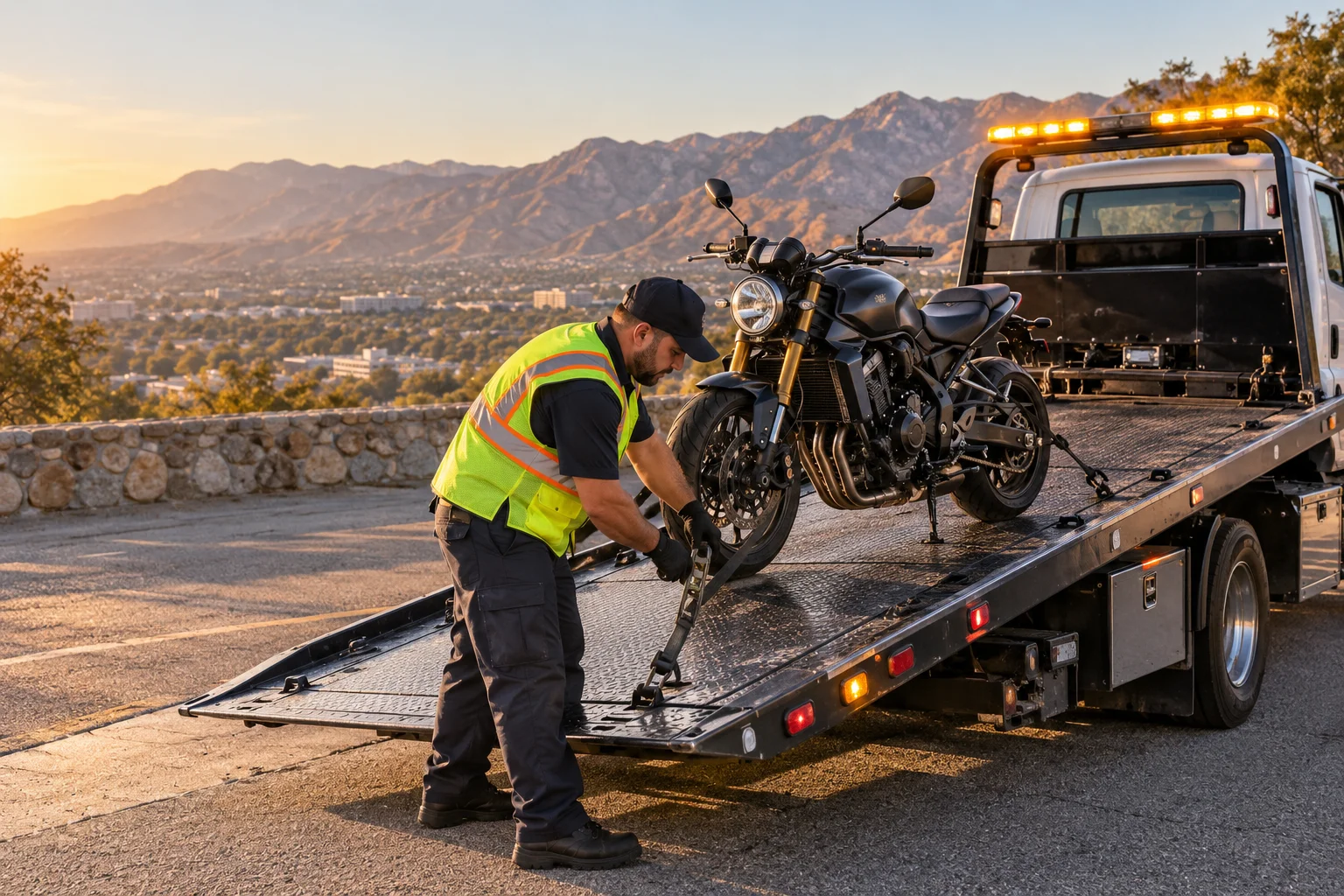
Start with your exact location and lane position
Start by identifying the road before describing the mechanical problem. “Pasadena” covers too much ground for a useful dispatch request. A rider near the 210 and Lake Avenue needs a different plan from someone parked near Colorado Boulevard.
Give the nearest cross street, freeway exit, or visible address. If your map app shows coordinates or a location pin, keep that ready. Mention your direction of travel on the 210 or 134 connection. Don’t rely only on the name of a nearby business. Entrances and parking areas may face another street.
Next, explain where the motorcycle stopped. Tell dispatch whether it’s:
- On a freeway shoulder
- Beside an exit ramp
- In a traffic lane
- At a surface-street curb
- Inside a garage or parking lot
- On a sloped road toward Altadena
- Behind a gate or other access point
Tell dispatch if moving traffic prevents you from inspecting the motorcycle. Move yourself away from traffic when you can do so safely. The NHTSA roadside safety guidance is a useful reference for protecting yourself during a roadside emergency.
Tell dispatch immediately if the bike blocks a lane or creates an active hazard. A mechanical breakdown isn’t the same as a crash, but either situation can become dangerous near traffic. For a non-crash freeway failure, our guide to breaking down on an LA freeway explains how to keep the location report focused.
Quick Tow LA connects riders with local operators. The operator sent out reviews the location and motorcycle before choosing a loading method.
The 210, Arroyo Parkway, and canyon roads need different plans
The phrase “motorcycle breakdown 210 freeway” should lead with location, not diagnosis. Dispatch needs your direction of travel, nearest exit, and exact shoulder position. Say whether you passed an exit or stopped before it. Those details are more useful than naming a neighborhood several miles wide.
Freeway locations may involve the California Highway Patrol. CHP handles disabled and collision vehicles on CHP-served highways through its Rotation Tow Program. Quick Tow LA can take your request, but don’t assume a private dispatch replaces directions from an officer at the scene.
The 134 connection creates another common location problem. A rider may describe the area as Pasadena without saying which freeway or direction applies. Check the road shield and your last exit if it’s safe. Share both pieces of information.
Arroyo Parkway calls need surface-street details. Give the nearest intersection and your side of the road. Mention whether the bike is at the curb, in a driveway, or inside a parking area. Colorado Boulevard and Lake Avenue also require a precise cross street. Long corridors make business names alone unreliable.
Roads toward Altadena need another layer of detail. Say whether the motorcycle is on level pavement, a slope, or a turnout. Report narrow access, a locked gate, or limited room around the bike. Don’t promise dispatch that a certain truck can reach it. The referred operator decides what’s suitable after reviewing the location.
The same rule applies near canyon roads. Tell dispatch if a blind bend or grade limits access to the motorcycle. Give dispatch an honest description and wait somewhere safer. Riders needing immediate help can review our emergency towing service while arranging the call.
What to report about the bike before dispatch
A motorcycle can be towed, but dispatch needs more than its make. Start with the year, make, and model if you know them. If you don’t, describe the style plainly. Say whether it’s a scooter, standard motorcycle, touring bike, cruiser, sport bike, or three-wheel model.
Report any modifications that change the bike’s shape or access. Examples include saddlebags, a top case, an extended front end, a sidecar, or loose aftermarket parts. Don’t remove parts beside traffic. Just describe what the operator should expect.
Then explain the bike’s current condition:
- Is it standing upright or lying down?
- Does it roll freely?
- Is the steering locked?
- Is either wheel visibly damaged?
- Is the chain loose or displaced?
- Is there a flat tire?
- Are fluids leaking?
- Is the key available?
- Is luggage attached?
- Is the bike inside a low-clearance garage?
Mention visible damage without trying to diagnose it. “The rear wheel won’t turn” is more useful than guessing that the transmission failed. “There’s fluid under the engine” is better than naming a fluid you can’t identify.
If there was a collision, say that at the start. Crash recovery is separate from a routine mechanical breakdown. The motorcycle may have damaged controls, loose bodywork, or debris around it. Don’t describe a crash as a simple no-start call.
The referred pro chooses the safe loading and securement method. Quick Tow LA doesn’t guarantee a particular truck, attachment, or setup before that review. Our motorcycle towing service explains the referral process, while the Los Angeles motorcycle towing guide covers broader countywide situations.
When roadside help will not solve the problem
Some motorcycle problems may look minor but still require towing. A jump or fuel delivery won’t solve visible crash damage, a wheel that won’t rotate, a displaced chain, leaking fluid, or a bike that can’t be controlled safely.
Report any smell of fuel, smoke, or leaking fluid without trying to identify the cause. Dispatch doesn’t need a perfect diagnosis. It needs enough detail to route the request appropriately.
A flat tire also needs an honest assessment. If the tire can’t support the bike normally, tell dispatch that it needs transport. The same applies when a control lever, handlebar, foot control, or mirror assembly has broken in a way that affects safe operation.
Electrical symptoms can be harder to describe. Report what happened in order. For example, say the engine stopped while riding, the lights went dark, or the starter made no response. Don’t guess at the battery, charging system, or wiring unless a mechanic has confirmed the fault.
Lost or damaged keys can change the request too. State whether the steering is locked and whether you have proof of ownership available. Don’t try to defeat the lock yourself.
A roadside attempt should stop when the bike can’t be operated normally or the location makes further inspection unsafe. A professional operator can transport the motorcycle without asking you to improvise beside traffic.
Quick Tow LA doesn’t publish a motorcycle transport price. No verified company rate card is available. Ask the referred operator to state the charge and payment terms before service begins whenever the situation allows.
How to choose a safe destination for the bike
Choose the destination before the motorcycle is loaded when possible. That prevents rushed decisions after pickup. The right destination depends on whether the bike needs diagnosis, repair, secure storage, or delivery to your home.
A repair shop is often the practical choice when the motorcycle won’t run or roll normally. Confirm that the shop works on your make and can receive the bike. Don’t assume every motorcycle shop handles every brand, model, or type of damage.
Check the shop’s current intake instructions yourself. Quick Tow LA can’t confirm whether a particular Pasadena business is open, has space, or accepts unattended drop-offs. Ask where the operator should leave the motorcycle and who will receive the key.
Home delivery may work when you already have a mechanic or need time to decide. Make sure the destination has legal, accessible parking. Tell dispatch about gates, steep driveways, underground garages, tight turns, or clearance limits. The operator needs that information before arrival.
If you’re considering a storage location, confirm its access rules and current charges directly. Don’t send the motorcycle somewhere based only on an old directory listing. Get the facility’s name, address, receiving instructions, and contact details from the facility itself.
Avoid choosing a destination solely because it’s closest. A nearby shop that can’t accept the bike may create another towing request. A farther destination may also affect the operator’s quote, so confirm the full trip before agreeing.
Keep crash recovery separate here as well. If law enforcement is managing a collision scene, follow the instructions given there. Don’t make arrangements that conflict with an officer’s direction. For an ordinary breakdown, provide dispatch with one confirmed destination and any access details the operator should know.
When to call us
Call when your motorcycle can’t be ridden safely, roadside help won’t resolve the failure, or the bike needs professional transport from a Pasadena street or freeway. Quick Tow LA will connect you with a local, licensed and insured towing operator who can review the bike and location. Call (213) 410-1414 to reach dispatch.