If you’re searching for “emergency towing near me,” first decide what help the vehicle needs. Quick Tow LA connects Los Angeles County drivers with local, licensed towing and roadside operators, day or night.
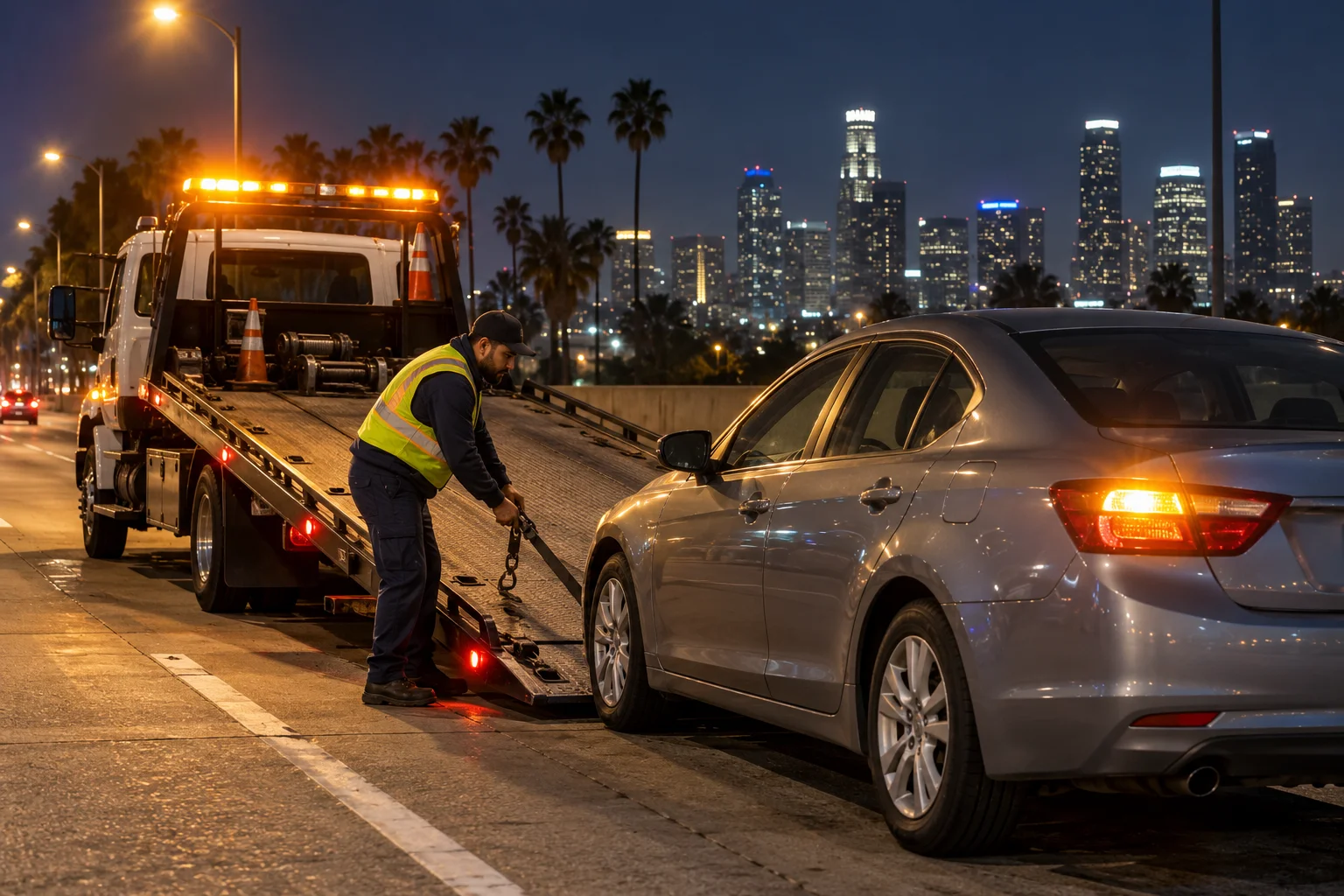
When a roadside problem becomes an emergency tow
An emergency tow is the right call when the vehicle can’t continue safely. That may follow a breakdown, collision, steering problem, or another failure. If the car simply needs a jump, fuel delivery, lockout visit, or tire help, ask whether roadside assistance fits the situation.
Location changes the decision across Los Angeles. A stalled car on the 405 presents a different call than one parked near home. A vehicle blocking traffic on the 110 also differs from one inside a quiet lot. The 5, 10, PCH, canyon roads, parking structures, and surface streets each create different access concerns.
Tell dispatch whether the car is fully off the roadway. Mention any collision damage, missing wheels, fluid beneath the vehicle, or locked steering. Don’t try to diagnose the mechanical failure from traffic. Describe what happened and what the vehicle does now.
A car that still starts may still need a tow. Grinding, severe vibration, damaged tires, or warning messages can change the decision. Dispatch can pass those details to the referred operator for review.
For a non-crash breakdown, read our guide to a car that broke down on an LA freeway. A collision involves different decisions. Our Los Angeles freeway crash towing guide explains that situation separately.
Quick Tow doesn’t operate the truck. We connect callers with operators in the network. The driver contracts with and pays the operator directly.
What to do on a freeway shoulder or active street
Start by identifying exactly where the vehicle stopped. “On the 405” isn’t enough. Give the travel direction, nearest exit, and whether you’re before or past it. State whether you’re on the right shoulder, left shoulder, median side, or an active lane.
On surface streets, share the cross street and direction of travel. Add a visible landmark when building numbers aren’t clear. In Downtown Los Angeles, identify the block and curb side. In a canyon, note the last named road or marked turnout. Along PCH, send a map pin if you can do so without entering traffic.
Open the NHTSA road safety resource for current roadside guidance. Follow directions from emergency personnel when they’re present. Don’t attempt a repair that places you in an active traffic lane.
If the vehicle is on a CHP-served highway, the situation may involve the California Highway Patrol. CHP clears disabled and collision vehicles through its Rotation Tow Program. Operators participate under a Tow Service Agreement, and CHP doesn’t publish one uniform statewide towing rate.
Tell Quick Tow dispatch if CHP or another agency is already at the scene. Also say whether an officer has arranged a tow. That avoids confusing a referral request with a tow already controlled by an agency.
Los Angeles traffic can obscure your vehicle from approaching drivers. Night conditions, curves, narrow shoulders, and changing lane patterns can make the location harder to describe. Stay focused on the map pin, road name, direction, and nearest exit. Those details are more useful than a neighborhood name alone.
What dispatch needs before a pro heads out
A clear first call helps the referred operator understand the job. Start with your exact location and intended destination. Then describe the vehicle and the problem without guessing at the cause.
Have these details ready:
- The road, direction, nearest exit, or cross street
- A map pin or nearby landmark
- The vehicle’s year, make, model, and color
- Whether it’s a car, motorcycle, pickup, van, RV, or trailer
- Whether the vehicle rolls, steers, and shifts into neutral
- Visible collision damage or missing wheels
- Your parking level in a garage
- Any height limit posted at the entrance
- The requested destination
- Whether police, CHP, security, or property staff are present
Parking structures need special attention. Give the level, stall area, entrance street, and posted clearance. Don’t assume every operator can access every garage. Dispatch needs those details before matching the request.
Location also matters on PCH and canyon roads. A dropped pin can narrow the search, but add the direction of travel. If a closure or official traffic control affects access, tell dispatch what you can see and follow posted directions.
The destination should be specific. Provide the repair shop, home, dealership, or another approved address. If the business is closed, confirm whether it accepts after-hours vehicle deliveries. Don’t assume a tire shop or repair facility permits an unattended drop.
Your contact information should match the person waiting with the vehicle. If someone else is there, explain who can meet the operator. Keep your phone available for communication about the location or changed conditions.
Roadside help, recovery, and towing are different calls
Roadside assistance is usually the category to request when the car may remain where it sits. Examples include a possible dead battery, lockout, empty fuel tank, or tire problem. Describe the symptoms and let dispatch determine whether a roadside operator may fit.
Towing moves a disabled vehicle to another location. Ask for emergency towing when the car can’t continue and needs transport. Give the destination during the first call whenever possible.
Recovery is different. Use that word when the vehicle is off the pavement, down an embankment, stuck in sand, or positioned where ordinary loading may not apply. A collision can also require recovery before transport. Don’t try to pull the vehicle out with another passenger car.
The distinction matters throughout Los Angeles County. A dead battery in a Sherman Oaks driveway may begin as roadside help. A disabled car on the 101 shoulder may require a tow. A vehicle beyond the pavement on a Malibu canyon road may need recovery evaluation.
Don’t choose the service based only on the lowest quoted amount. An incomplete description can lead to the wrong type of call. Report the vehicle’s position, damage, access, and destination first.
Roadside assistance can include towing in some memberships or insurance plans, but the terms vary. Quick Tow can’t confirm another company’s benefits. Call that provider and ask about towing distance, service limits, payment, and destination rules.
There’s also no verified universal “80/20 rule” for this Los Angeles towing decision. If a provider uses that phrase, ask what it means in its own agreement. Quick Tow doesn’t publish a per-kilometer or per-mile brand rate.
What to confirm before the truck rolls
Ask the referred operator for the total quote before authorizing dispatch. Quick Tow doesn’t publish its own rate card. The driver contracts with and pays the operator, so pricing questions must be settled directly with that company.
Confirm these points:
- The service being dispatched
- The pickup location
- The vehicle type and condition
- The destination
- How distance affects the charge
- Any charges connected with access or recovery
- Accepted payment methods
- What could change the quoted total
Ask for clarification when a charge isn’t clear. Don’t rely on a price from an unrelated city, old search result, or another driver’s trip. Los Angeles County contains separate jurisdictions and towing programs.
The City of Los Angeles uses Official Police Garages for LAPD, LADOT, and other agency tow requests. Those city-set fees concern that system, not Quick Tow’s referral service. Outside the City of Los Angeles, other jurisdictions can run different impound programs.
A voluntary emergency tow also differs from a police-ordered impound. If an agency arranged the tow, ask the officer or agency where the vehicle is going. Don’t send a second operator after the vehicle has already entered an official process.
Before approving an after-hours delivery, call the destination. Confirm that it accepts vehicles while closed and learn where the operator should leave the car. Get permission before using a locked lot, dealership lane, or private parking area.
Finally, confirm that dispatch has the correct phone number and map pin. If the vehicle’s location changes, update dispatch before the operator arrives. Don’t move the car without telling them.
When to call us
Call when the vehicle can’t continue safely, needs transport, or may require professional recovery. Quick Tow LA will connect you with a local towing or roadside operator, subject to operator availability and the details of the call. Call (213) 410-1414 to reach dispatch.