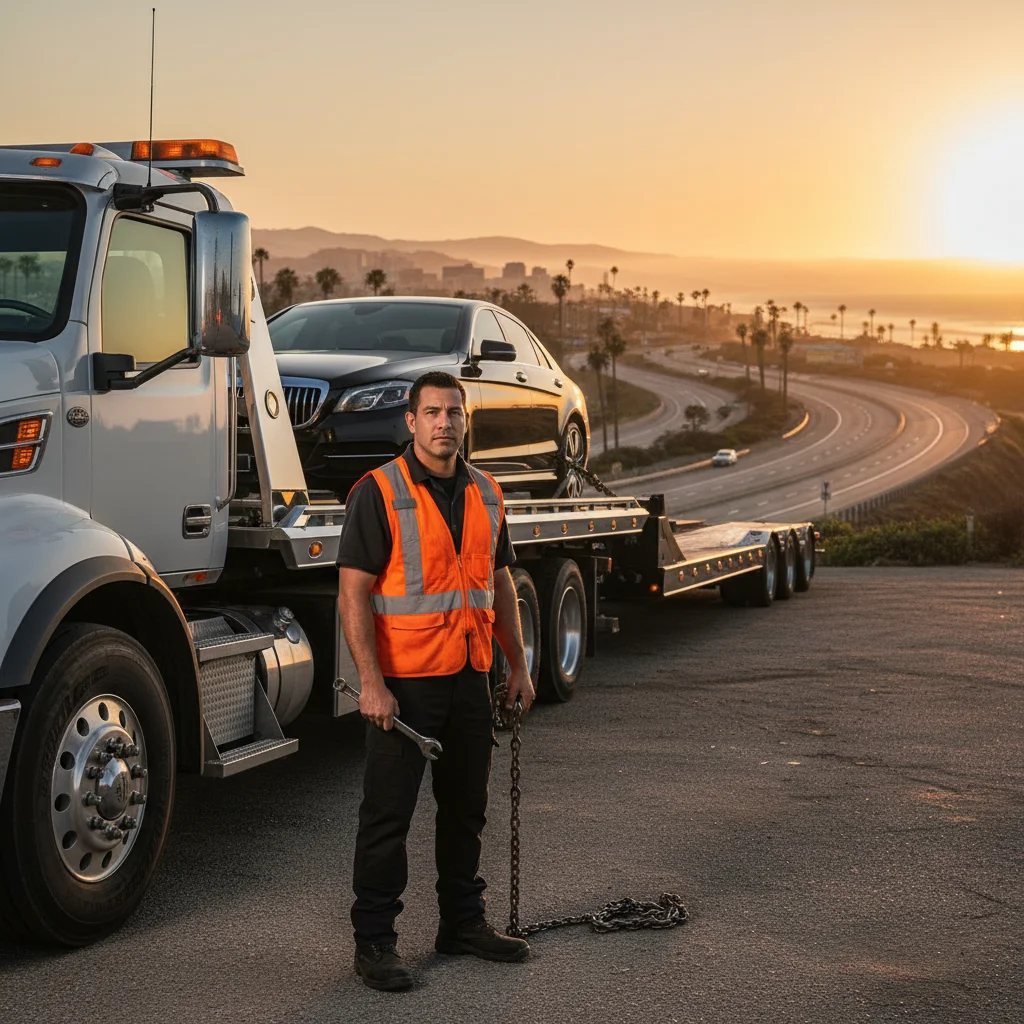
A long-distance tow is one of the most often gouged corners of the tow industry. A flat-rate written quote of one number turns into something much higher at drop-off because of extra mileage that was never agreed to. Here is what reputable LA operators price to, and what to ask for in writing before a truck rolls.
Quick Tow LA does not publish a flat rate. No operator with a rate card has signed on yet, so any dollar figure for the brand would be invented. The cost conversation below is qualitative, covering what drives the number and how to keep it flat-rate, not what the brand charges.
What shapes a long-distance tow out of LA
For a standard light-duty vehicle on a flatbed, the same set of inputs drives every quote, no matter the destination:
- Round-trip mileage. The truck goes there and back. A 300-mile destination means roughly 600 miles of truck.
- Fuel cost at current California and destination-state rates. Diesel in California is meaningfully higher than Arizona or Nevada. Quotes reflect both legs.
- Driver hours. Long-distance tows often need an overnight or a two-driver relay depending on total hours and route.
- Vehicle size and type. A standard sedan on a flatbed versus an EV or a lifted truck is a different job.
When you get a long-distance quote, it should be one flat number, in writing. “Per mile” pricing on a long haul is the trap. A 300-mile tow at a per-mile rate is two to three times the fair market rate for the same trip priced flat.
Common routes out of the LA basin
For LA drivers, the realistic long-haul destinations are well-worn corridors. San Diego is a real long-haul down the 5 through Anaheim-adjacent traffic and along the coast. Las Vegas runs east on the 15 through Victorville and Barstow, then across the state line. Phoenix goes on the 10 through Riverside County and across the Colorado. Bay Area runs north on the 5 or the 101, depending on how the truck is routed.
For each of these corridors, ask for a single flat-rate number, in writing, before dispatch. Avoid the trap of a “plus mileage” add-on at the destination, since those numbers are rarely the ones you were quoted over the phone.
Same-day versus scheduled long-distance pickup
Scheduling the pickup 24 to 48 hours out is almost always the lower price. Operators route your vehicle on an existing outbound trip or bundle it with another load heading the same direction. Most written quotes assume scheduled pickup.
Same-day long-distance dispatch is available, but it runs higher. A dedicated truck and driver have to take the job just for your call. Worth it in a real emergency, expensive when you have any flexibility.
If the vehicle is not drivable but you have flexibility, such as a failed engine headed to a specialty shop in the Bay Area, scheduling two to three days out saves real money. And if an EV just needs a charge to make the trip under its own power, ask about mobile charging options before committing to a long-haul flatbed bill.
What a written flat-rate quote covers
A complete long-distance quote should include all of these:
- Hook-up and loading at the origin
- Soft-strap wheel nets (never chains, never frame hooks)
- Round-trip mileage and fuel
- Driver hours and any required CDL permits
- Drop-off labor at the destination
- Photos of the vehicle at pickup, during transit if needed, and at drop-off
If the operator cannot tell you upfront whether any of those are included, push for a fully-loaded number before the truck rolls. Most of those line items are known in advance; the things that get quietly added at drop-off are the ones that surprise people.
How far does AAA or insurance roadside coverage go
Most AAA and insurance roadside plans cap included towing at 100 miles per tow. A long-distance job exceeds that, so:
- AAA Plus typically covers up to 100 miles
- AAA Premier typically covers up to 200 miles
- Insurance roadside plans usually cover 100 to 150 miles
Beyond that, the difference is out of pocket. The tow company bills the motor club or insurer for the first 100 miles and bills you for the rest. Some operators let you pay only the difference. Others want full payment from you and have you seek reimbursement. Ask which it is before you book.
Cross-border moves
Towing a vehicle from LA directly into Mexico is generally not what operators do, because of insurance and DOT rules. The workable path is tow to the border crossing, hand the vehicle off to a partner carrier on the other side, and let the partner complete the trip. Ask for the LA-to-border flat rate plus the partner’s fee on the other side, which varies by destination.
What to ask before booking a long-distance tow
- “Is that the total flat rate?” If they say “plus fuel” or “plus mileage over 100,” press for the fully-loaded number.
- “Do you photograph pickup and drop-off?” Yes is the right answer.
- “Who is the receiving party at drop-off?” You or your contact has to be there, or keys have to be left with the destination shop.
- “What is your insurance on the load?” Ask for proof of cargo coverage, especially on high-value vehicles.
- “What happens if my vehicle does not start at destination?” The driver unloads with soft-strap neutral push, with no power drive-off required. Confirm this.
How local operators handle LA coverage
Coverage out of the LA basin runs through the usual freeways: the 5 up to the Bay Area, the 15 to Vegas, the 10 to Phoenix, the 5 or the 101 down to San Diego. Local color doesn’t change the price, but it does change which operators will quote it. Long-distance from the Valley, the South Bay, and the Inland-Empire side of LA County all run out of the same basin through different onramps.
Operators quote each route as a flat rate, written before dispatch. The job is the same whether it started in Van Nuys, in East LA, in Long Beach, or in Santa Clarita; the trip mileage and the destination are what change the number.
When to call
If a vehicle in LA County is going somewhere more than 100 miles away, the move is on the long-distance track. Ask the operator for a written flat-rate quote with the items above. Get the operator’s name, the equipment (flatbed or heavy-duty wrecker, depending on the vehicle), and the window for pickup. Verify the destination address and whether the receiving party is reachable on arrival. Call (213) 410-1414 to start a long-distance tow quote out of LA County.
Related reading
For a full pricing breakdown within LA County, see our tow cost guide for Los Angeles. Choosing between truck types? Why every EV goes on a flatbed explains when a flatbed is the right call and how that affects the quote.
Frequently asked questions
How much does a long-distance tow from Los Angeles cost?
A standard flatbed tow out of LA to Las Vegas, Phoenix, or San Diego runs hundreds to over a thousand dollars depending on distance, vehicle, and pickup timing. Always get a single flat-rate number in writing before dispatch. Per-mile pricing is the trap.
Does AAA cover long-distance towing?
AAA Plus covers up to 100 miles per tow; AAA Premier covers up to 200 miles. Beyond those limits, the difference is out of pocket. A tow longer than the plan pays the operator for the first covered miles and bills you for the rest.
Can I save money by scheduling a long-distance tow in advance?
Yes. Scheduling 24 to 48 hours out typically saves 15 to 30 percent compared to same-day dispatch. It lets the operator route your vehicle on an existing outbound trip or bundle it with another load going the same way.
Do I need a covered trailer for long-distance transport?
For standard vehicles, a regular flatbed is fine. Covered-trailer transport is worth it for exotics, classics, auction-grade, or show cars where road debris, weather exposure, or cosmetic protection matters. Covered transport runs roughly double the open-flatbed rate; ask the operator for the specific number in writing.